Tuesday, August 7, 2012

Uses of Salt

(source: wikipedia)
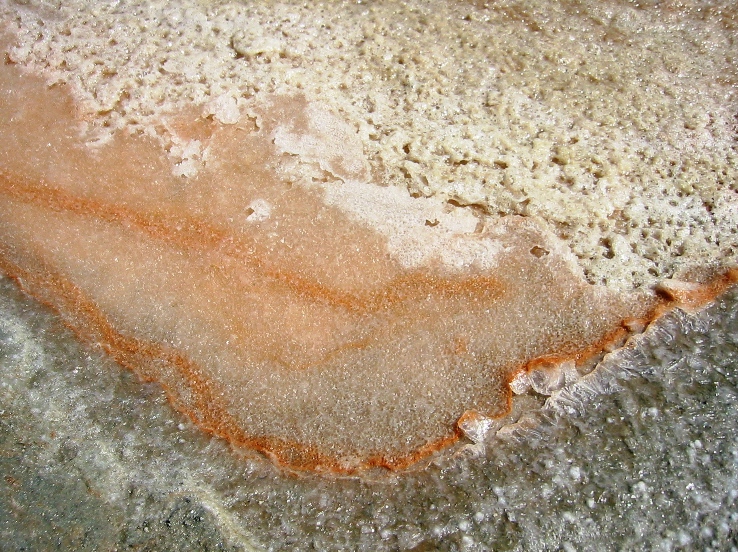
I’ve been thinking a lot about what to do with all the salt from the desalination process. WWF said, “urging further research into the tolerance of marine organisms and ecosystems to higher salinity and brine waste, byproducts of the salt removal process.” and according to wiki  “Currently 50% of world-salt production still relies on fossil energy sources” so there is some discrepancy but it seems like something needs to be done in a usefully way with the removed salt brine. I’d suggest shallow drying pools, like the French sea salt as a simple solution te get it to a normal dry salt. Also the community scale I’m looking at wouldn’t have the city or larger scale of industrial plants. The solution I’m researching is to use some of the salts for table salt or industrial salt. This leads me to question of what are those uses?
I found this great resource for uses of salt (vs the great number of “home uses” other places online)

ALUMINIUM PURIFICATION Salt is used as a flux. The salt sits on top of the molten aluminium in molten salt form, this removes iron and other metals from aluminium leaving pure metal.
BREAD AND PASTRY Salt is used to give added flavour to bread and pastry. The main requirement here is that the product, either flossy or superfine, is clean and free from any extraneous matter. Salt also performs a function in controlling the rate at which the yeast works in the dough, giving a better texture to the bread.
CANNING OF MEAT AND VEGETABLES Salt is added to the products during processing and it is essential in these cases that the salt be free of grit, and particularly free of any specks or iron particles as these show up in the finished product.
CAUSTIC/CHLORINE MANUFACTURE The conversion of salt to form caustic soda and chlorine requires a crude salt with very high chemical purity. Salt is dissolved to form brine and the impurities are removed chemically before the brine passes into the electrolytic cells.
CHEESE MANUFACTURE Most cheese today is made on automatic machines and salting must be carried out in a continuous process. The salt used must be extremely dry at all times and contain virtually no fines beyond 60 mesh.
DRILLING Salt is used to mix with boring mud which is pumped down bore holes to form a wall when drilling through gravel or sandy material which will not stand up on its own.
FISH & MEAT CURING This is usually carried out by dissolving salt to form a strong brine to act as a pickle. The products may be placed in the pickle, or in many cases the pickle is pumped into the actual meat (such as in the case of bacon and ham). Salt for these purposes should be refined grades, clean and of high quality.
GENERAL COOKING Fine salt is used for all sorts of cooking and is similar to table salt, without the addition of Sodium Silico Aluminate.
HIDE CURING Hides and sheep skins are normally salted with a reasonably low quality salt. Hide salts are usually only washed grades but contain certain additives such as boric acid, to keep the hide as light a colour as possible. Other additives are naphthalene and sodium fluoride.
POTTERY PRODUCTION Salt is used to form the very smooth glaze on clay tiles or pottery ware. After a kiln of tiles reaches a yellow to white heat, salt is then fed on to the fire. The salt vaporises and passes on to the surface of the tile, actually forming a glass surface.
SOAP & GLYCERINE MANUFACTURE Fats and oils are saponified by heating with caustic soda to produce soap and glycerine. The soap is "grained" or "salted out" from solution by adding salt or strong brine.
SWIMMING POOLS Swimming pool salt is designed specifically for use with salt pool chlorinators
SYNTHETIC RUBBER MANUFACTURE Synthetic rubber is produced in the form of white latex to which salt is added as an emulsifier. Salt for this purpose is in crude form, of medium quality.
TABLE SALT This is a specially prepared salt for domestic purposes, with small, even crystals. Sodium Silico Aluminate is added as a free flowing agent. Table salt also comes in iodised form.
TEXTILE DYEING Salt is added to the dye baths during the process mainly to make the dyes fast. Flossy salt is the grade most commonly used in this process.
WATER SOFTENING Salt is used in both industrial and home water softening units. The purpose being to regenerate the resins which pick up the objectionable salts in the normal water supply. Salt for this purpose is usually a washed or refined grade. A similar type of salt is used for making a brine for brine cooling systems.
OTHER USES Other uses of salt include butter manufacture, soil stabilisation, tempering of steel, fertilisers and weed killers, and pine board manufacture.

Boiling Point of Water

This the the key feature of multi-stage flash distillation. Water boils at different temperatures in different pressures. You might know that water boils at lower than 100°C at higher altitudes (b/c there is lower air pressure), and that cooking instructions are different for “high altitude cooking”. Why is this? Lets start by defining what is boiling? “The boiling point of water is the temperature at which its vapor pressure equals the atmospheric pressure”. What does that mean? Well a simple way to think about it is like this. When water boils it makes bubbles, and its easier to make bubbles when there is less pressure pushing against the bubble. Less pressure, like higher altitudes, create an easier environment to make those bubbles. Easier to boil means less energy and a lower temperature to reach vapor point, or boiling. In contrast pressure cooker creates higher pressures so the water DOESN'T boil until hotter or higher temperatures.

Understanding Pressure

In order to understand Multi-Stage Flash Distillation one needs to understand Boiling Points of Water. In order to understand boiling points of water one needs to understand Air Pressure.

Pressure seems like an easy thing to intuitively understand, but it might not be as simple as previously thought. We’ve all swam down to the bottom of the deep end of a pool and the pressure of the water hurt our ears. This is a simple example of our common understanding of pressure.
When we start to measure pressure things get a little tricky. I can weigh objects with a scale, but I can’t take that same scale and measure pressure even if I feel it like the bottom of the deep end. If I put the scale in the low end of the pool to weigh water it won’t measure anything nor if I put the scale in the deep end would it change. We know the deep end of the pool has more pressure but how can we measure it? There are a few ways to measure pressure, but thats not needed to understand pressure. The idea of measuring pressure helps to understand what it is and how its working.
How much does water weigh? We can take a 1 liter bottle and put it on a scale and you might tell me that 1 liter of water weighs 1 kilogram (2.205 lbs.) But if you were in a pool, underwater, how could you tell me how much water weighed if you couldn’t get out of the water? Also If you were in the deepest parts of the ocean and filled that same bottle with water it would probably explode on the way back up b/c even at 10 meters underwater it would already be filled with 2 liters of water. How is that possible? Pressure. 10 meters (33’) underwater is double the pressure of being out of the water (or 2 atmospheres). All this makes the question how much does water weigh difficult to answer. This is all still avoiding temperatures effect on all this. (Water expands when frozen, for example, so 1 liter bottle of frozen water would be less than warm).
Air has similar problems. If I could hand you a box of air, and asked you does it weigh anything, I imagine most people would say no it doesn’t. B/c we use common sense and by comparison to things we consider weighing something the air doesn’t weigh anything. But you would agree that there are molecules of “air” in there (nitrogen, oxygen, water vapor, argon, and carbon dioxide - lets call it “air”). If I had a box of “outer space” and a box of air, I think we’d all agree that air has far more molecules in it than outer space. So air does weigh something, just very little. It’s also hard to measure since everything we do is surrounded by it. Which is why it’s easier to describe air in pressure than weight. Similarly to the deep end in a pool, there is air pressure from the 30km-ish (15 miles-ish) of air above us.  
Air pressure can be simplified like this. If we had boxes of air, as you stack them one on top of one another, the bottom boxes would start to squash from the weight of the boxes above it. The more the box is squashed the more pressure it has. This is why higher altitudes have lower pressure, there are fewer boxes of air above them.


Eliodomestico: Solar Household Still

This is similar to the water cone, only larger and more durable (well not plastic). This solar still can clean water with relatively minimal daily effort, and minimal maintenance. Great option but I imagine one would need to have a few of them all working.

http://www.gabrielediamanti.com/projects/eliodomestico

Tuesday, October 11, 2011

Great Solution

Wow I LOVE this!

Q. Does LIFESAVER bottle remove the salt from sea water?
A. No. LIFESAVER bottle does not desalinate seawater.
Still an amazing solution for clean drinking water. http://www.lifesaversystems.com/

Saturday, September 17, 2011

The Seawater Greenhouse


Part of the problem or part of the solution, is growing food. Water is step 1 of many. A company jumping right to to next step of the solution is The Seawater Greenhouse. These guys are my hero's. What an awesome project! Makes me think there might be an ideal sea water chain. Where it goes through a system like this, heating the sea water somewhat as it moves along the condensation pipes then into a solar multi-stage flash distillation into more fresh water. 

A word on Patents

I'm pretty sure since companies make desalination plants for lots of money that there are a lot of patents involved. Apparently even making something thats under patent for personal use can be illigal but
From Ius mentis
"Can a private person infringe on a patent?
Patent laws in most countries require some sort of commercial exploitation of the patented invention for the exploitation to be patent infringement. So, a private person can infringe if he, for example, makes the invention and sells it to his friends, or puts it on an advertisement-sponsored website. But if he makes it for himself out of curiosity, and only uses it himself, there is no infringement.
In the USA, also non-commercial use of the invention can be patent infringement, although it is rare for a non-commercial use by a private person to result in a lawsuit.
In practice, the chance of getting sued for patent infringement as a private individual is very slim. Patent lawsuits are very expensive, and most private persons will not be able to pay the damages to the patent holder anyway."
The laws surrounding this are pretty clear. Since I have no intention of selling anything, or making money from this I hope to not worry about it. Still, it is a consideration since ideas I've had, I've later found images on sites that make me think its probably already patented by someone else.